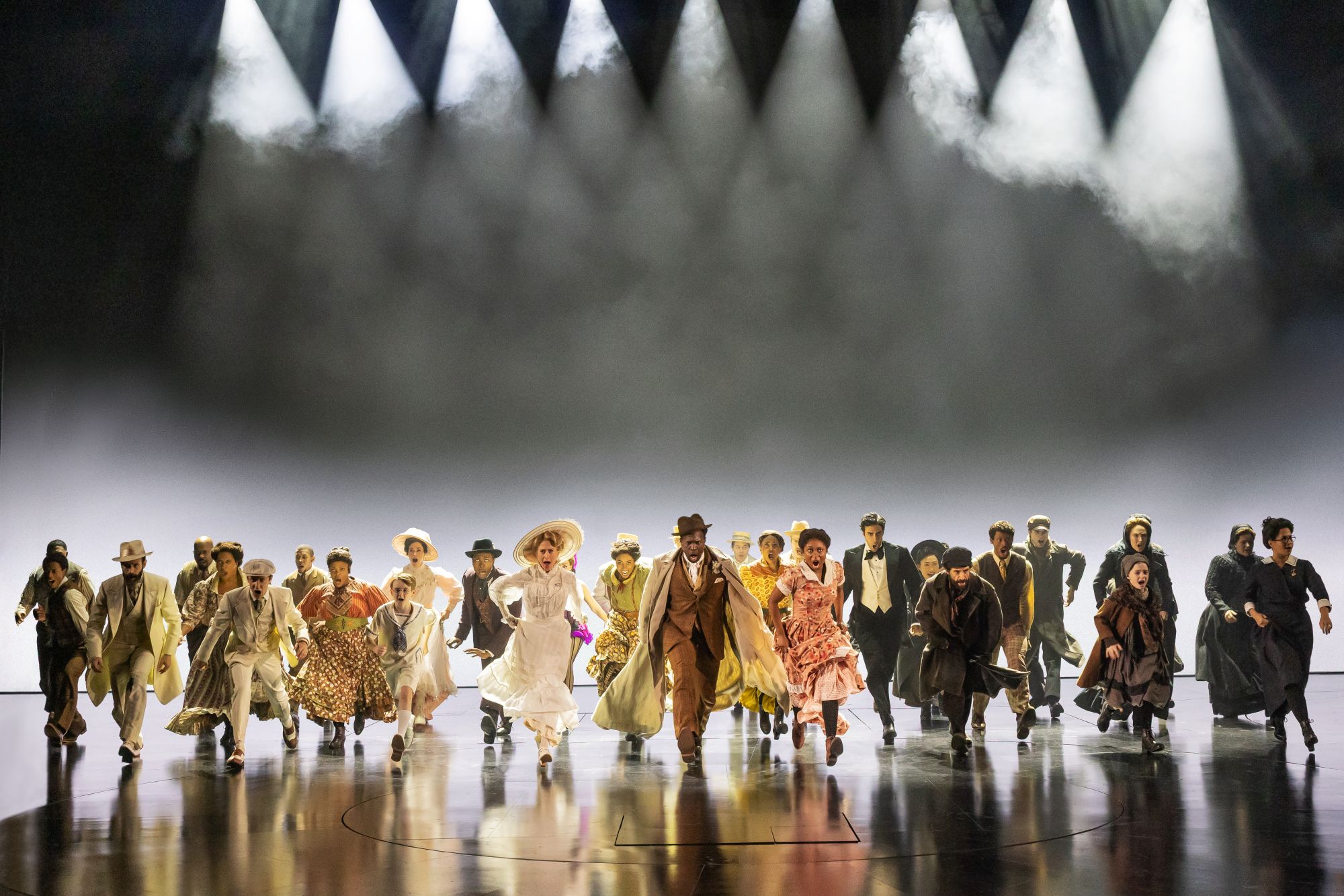
Ragtime holds a special place in my theatrical consciousness. I saw the original production on Broadway as a young teenager, and it opened my eyes to the possibilities of the musical as a genre. It was the first musical I encountered that dealt with serious subjects – racism, xenophobia, anti-Semitism, and women’s rights – and while it was entertaining, it felt more substantive than anything I’d been exposed to up until that point. The score by Stephen Flaherty (music) and Lynn Ahrens (lyrics) still resonates in my ears.
So why did the acclaimed revival, at Lincoln Center Theater after a run at City Center last year, leave me so cold?
The glib answer is that I’ve been exposed to more art in the three decades since Ragtime debuted, and what seemed revolutionary to my thirteen-year-old mind now registers as quaint. Yes, the musical does address weighty topics, but it handles them often in a facile way, and it’s hard to avoid certain uncomfortable truths about the show itself. Many of the serious issues raised in the musical resolve themselves in superficial ways, and characters are rarely three dimensional. They seem to represent ideas rather than human beings, as evidenced by the preponderance of people who have descriptors rather than names.
Lear DeBessonet’s production, which originated as a concert staging, also keeps the audience at a respectful distance. Performed on a mostly bare staging, it never immerses the viewer in the Lower East Side tenements or Harlem nightclubs that are so integral to the story, nor does it project the forbidding WASP world of New Rochelle, New York with any verisimilitude. The creator production was spare but effective; here, David Korins barely rises to the level of suggestion with his scenic designs.
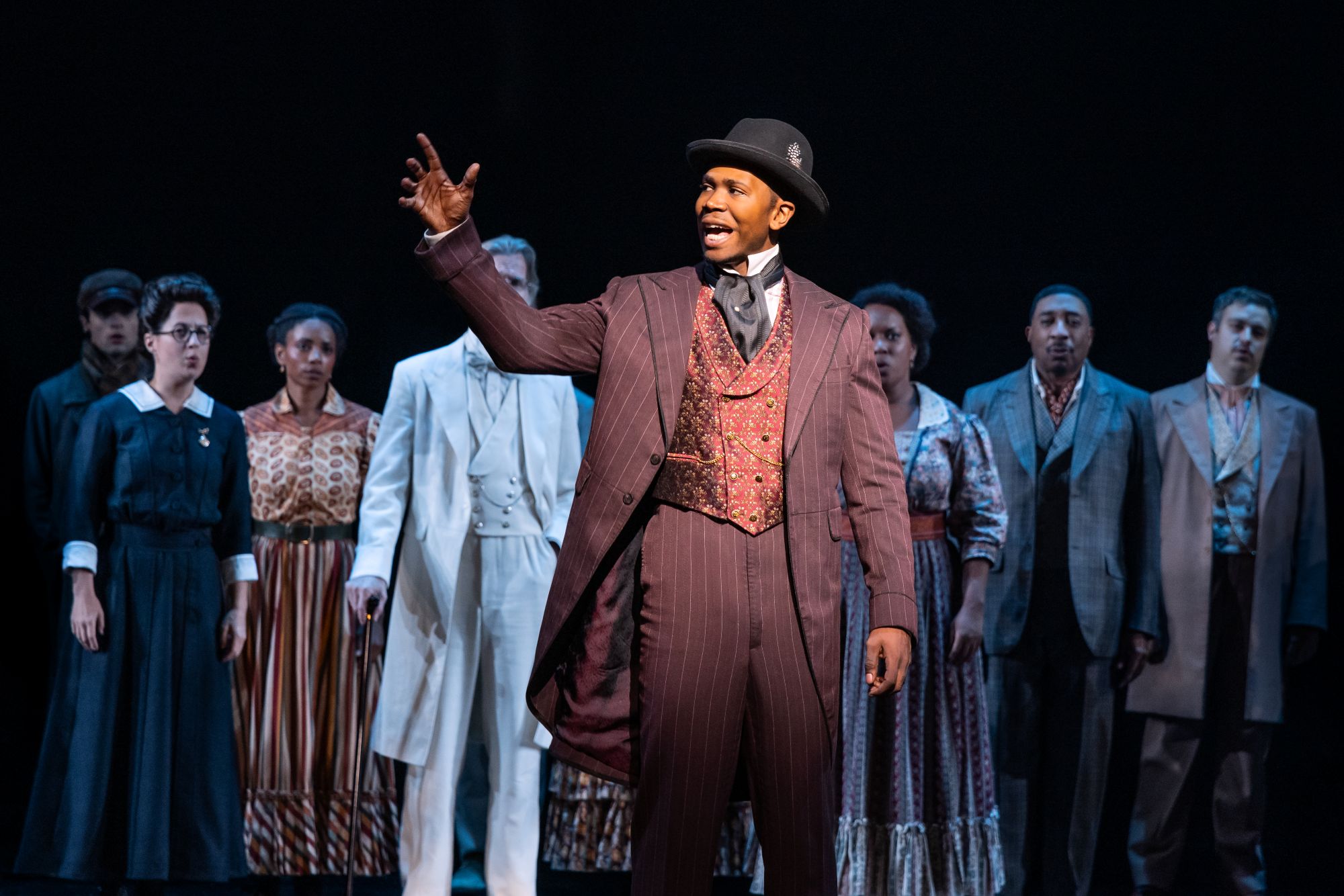
DeBessonet and choreographer Ellenore Scott also have difficulty staging large ensemble numbers, where it’s frequently difficult to tell who is meant to be the center of focus.
As Coalhouse Walker Jr., who is spurred into revolutionary activism after the murder of his fiancé Sarah (Nichelle Lewis), Joshua Henry has an extraordinary voice, but his persona remains too benevolent and placid to completely communicate Coalhouse’s rage at a system that doesn’t value Black lives. Lewis portrays Sarah with a touch too much affectation and a voice that doesn’t entirely align with the role’s soprano demands.
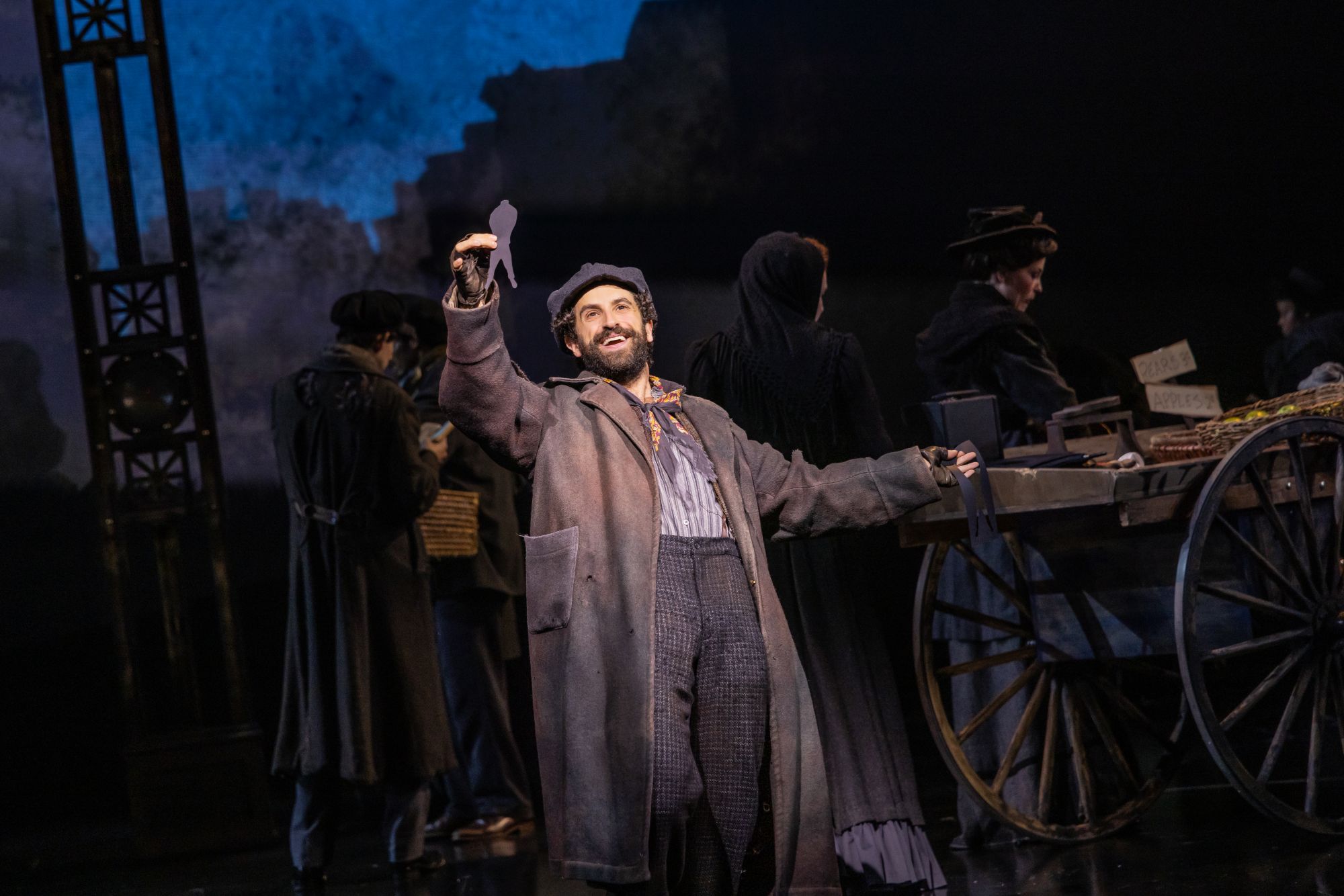
Caissie Levy and Colin Donnell make a picture-perfect couple as the archetypal Mother and Father, but both struggled vocally at the performance I attended. Brandon Uranowitz is compelling and humorous as Tateh, who rises to the top of the American food chain after emigrating from Latvia, and Ben Levi Ross brings a fiery energy to Mother’s Younger Brother, who’s always in search of something to believe in.
There is no question that Ragtime deserves a place in the canon of American musical theater, but perhaps it holds an outsize position compared to musicals that have followed, which address many of the same subjects from a sharper angle. As one character in the show sings: “The era of Ragtime had run out, as if history were no more than a tune on a player piano. But we did not know that then.” Perhaps we know it now.


