If you took Theatre History in college, you likely learned about The Adding Machine, Elmer L. Rice’s landmark work of American Expressionism from 1923. Chances are you also never saw it. Alternately brilliant and confounding, The Adding Machine has become one of those plays more often discussed than produced – due surely in no small part to the unsavory attitudes expressed by its characters.
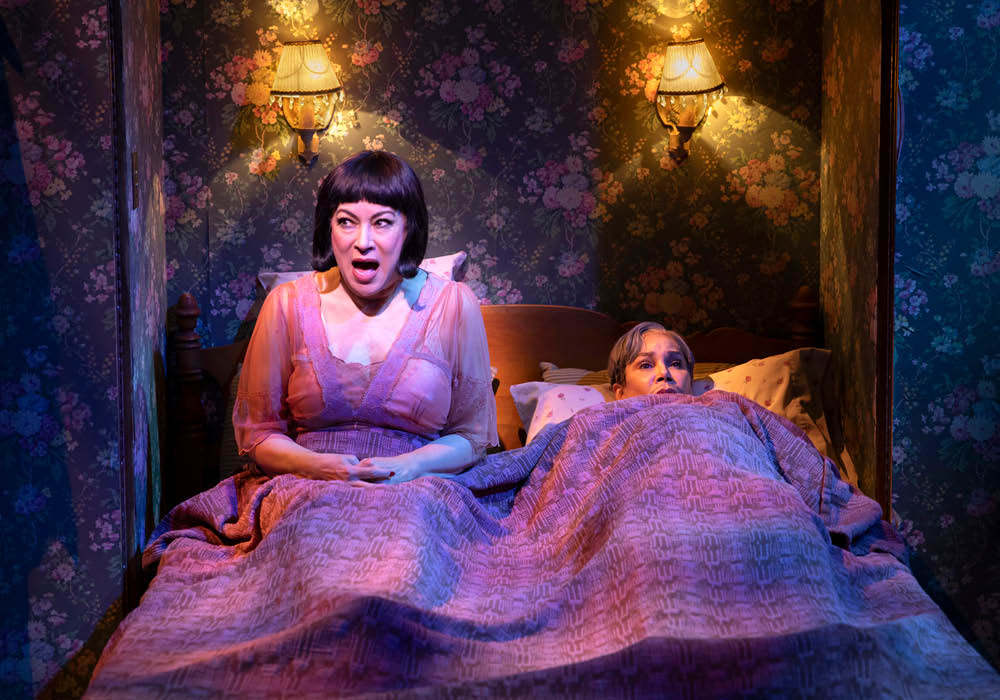
Prior to an adaptation by Thomas Bradshaw produced by The New Group this spring, the only New York appearance of this material I could find was another reworking: a musicalization, called Adding Machine, that played the Minetta Lane Theatre for a few months in 2008 after a successful debut in Chicago.
Scott Elliott’s production – the first at his company’s new Hell’s Kitchen home, The Theater at St. Clement’s – doesn’t burnish the play’s reputation as a viable work for the stage in the 21st century. As demonstrated in prior works like Burning and The Seagull/Woodstock, NY, Bradshaw demonstrates a coarseness in his writing that underlines the racist, sexist, xenophobic, and homophobic rhetoric espoused by Mr. Zero, who loses his tether on reality when he’s made redundant at work by the titular appliance.
But Bradshaw often does this at the expense of the show’s chilling message about alienation and automation, further distancing the audience from a message that could, and should, ring eerily true amid the rise of artificial intelligence. Rice was forward thinking; Bradshaw seems merely prurient.
The decision to cast Daphne Rubin-Vega, a woman of color, as Mr. Zero also feels cheap. It winks at the awful things this character says by reminding the audience that, while the character is a white man, the voice speaking his awful rhetoric belongs to a nonwhite woman. It softens what should be harsh and difficult. It doesn’t help that Rubin-Vega’s performance is grandiose and draggy, never locating the pain beneath Mr. Zero’s horrific outer shell.
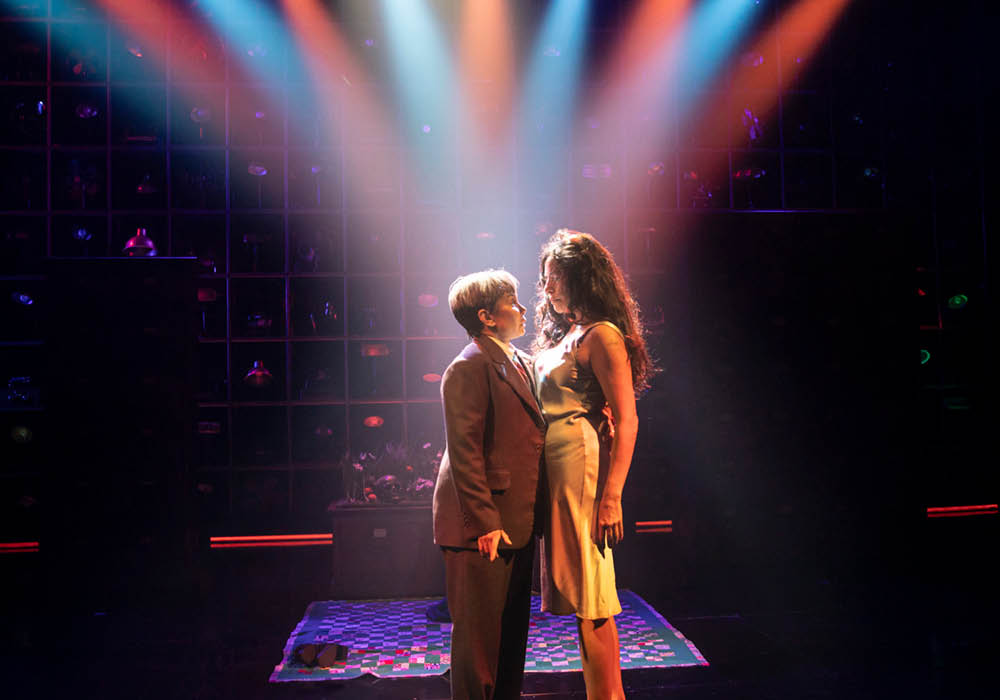
Jennifer Tilly remains a compulsively watchable and interesting actor, although she leans a bit too heavily on the harridan stereotype as the long-suffering Mrs. Zero. The role works better if you feel the slightest sympathy for her, or intuit that she’s more agreeable than her husband’s hectoring view of her. Sarita Choudhury is compelling as Daisy, the unrequited object of Mr. Zero’s affection, although she overdoes a New Yawk honk at times.
Bradshaw has added explanatory monologues, all performed by Michael Cyril Creighton, who tamps down his usual spriteliness to appear as a chilling interlocutor. Like much else in the adaptation, these monologues make obvious what should be implied.
The Theater at St. Clement’s seems a promising new home for The New Group, and the production benefits from fine scenic and lighting details (by Derek McLane and Jeff Croiter, respectively). But the results just don’t add up.


