
Global warming meets the cool factor in The Seasons.
Opera Philadelphia’s latest offering vibrantly bears the imprimatur of our (still new) General Director and President, Anthony Roth Costanzo. ARC, as he is universally known, not only stars in this original work—he also co-conceived it with an array of distinguished artists whose names regular appear in the most elite New York culture circles: playwright Sarah Ruhl, designers Mimi Lien & Jack Forman (scenery), John Torres (lighting), Victoria Bek & Carlos Soto (costumes), director Zack Winokur, and choreographer Pam Tanowitz. A near-instant sellout when tickets became available, The Seasons could scarcely be more chic.
But what is it, exactly?
On one level, The Seasons can be defined fairly easily and traditionally. The Baroque opera pasticcio—a kind of mash-up where arias by different composers were rearranged and reused in a new dramatic context—dates back to the Baroque era itself.
The practice continued, and in 2011, the Met had considerable success with The Enchanted Island, an original pasticcio that used Handel, Rameau, Vivaldi, and others. (ARC featured prominently in the premiere cast.)
Vivaldi’s music is the core of The Seasons, which, in fact, makes it not quite a true pasticcio. But the score, based in large part on (you guessed it) The Four Seasons, certainly reworks Vivaldi in new and original ways. Ruhl’s libretto is in English, though some sections of the arias are sung in Italian. The setting and plot are contemporary.
Perhaps I should say plots-plural. Ostensibly, The Seasons is a cautionary tale about global warming, though the tone is more light-hearted than that suggests. Alongside this is a budding relationship between a lovable but insecure and fretful poet (ARC himself) and an equally vulnerable painter (countertenor Kangmin Justin Kim), which humorous but fraught with millennial agita. There are other romantic connections in the works.
Whew. That’s a lot, at least for me. I’d also have to say that (again, for me), The Seasons is less than the sum of its parts.
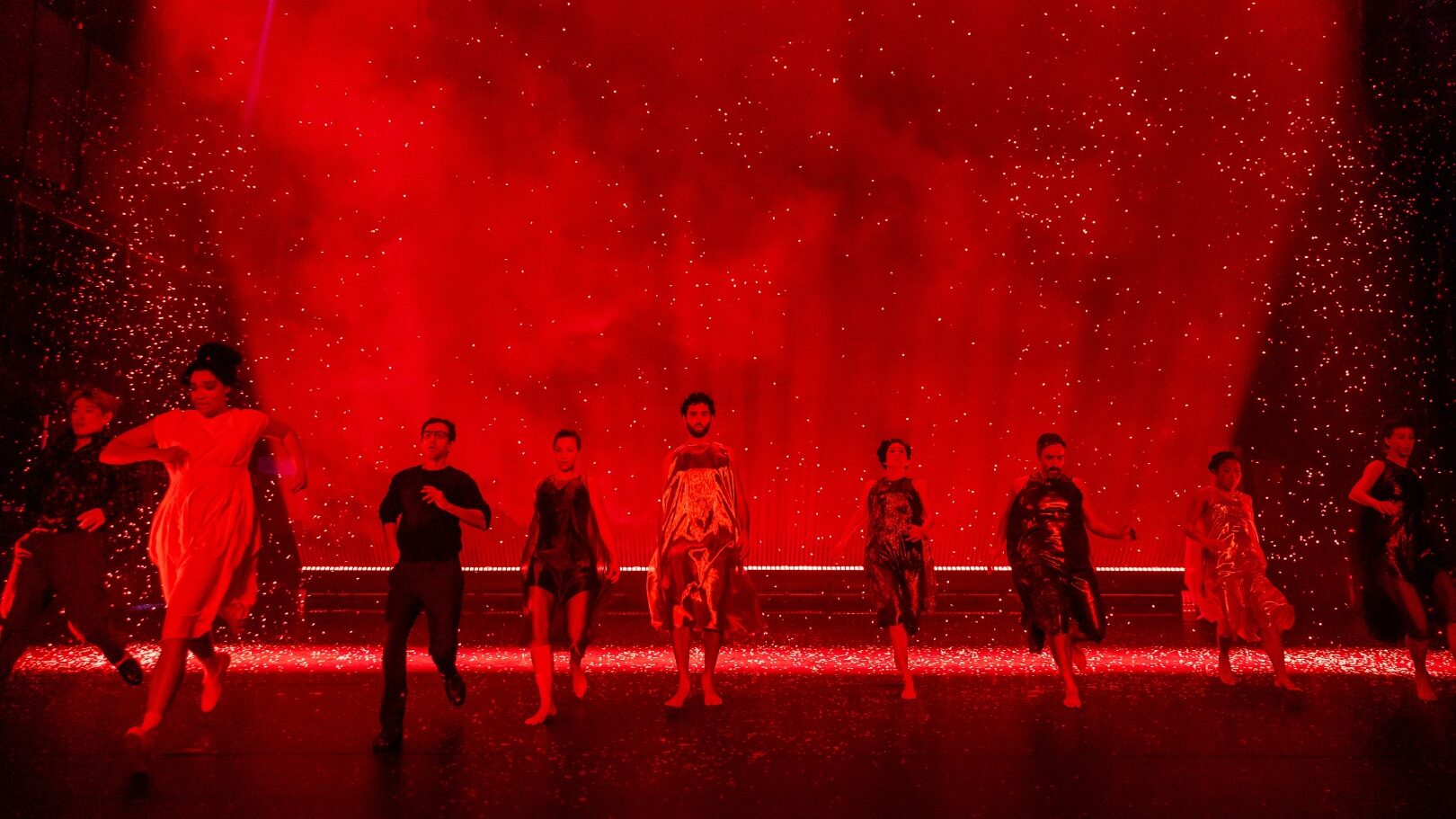
There are significant pleasures to be found here for sure. The visual production is simultaneously elegantly spare and complex, with many spectacular touches that convey the atmospheric shifts—if this is global warming, it’s certainly visually glorious. For these, credit the powerhouse design team.
I also enjoyed the dancing. Pam Tanowitz’s choreography playfully leans into traditional balletic steps while framing them with slyness and wit, notably avoiding traditional partnering. (All of The Seasons pointedly and charmingly countermands traditional gender roles.)
Of course, The Seasons is presented by Opera Philadelphia, and indeed it is—after a fashion—an opera. Corrado Rovaris and the small-but-mighty orchestra assembled here is far more attuned to Baroque stylishness than one might expect in a company largely devoted to later works.
The singing is more mixed. ARC himself certainly delivers; long-lined Baroque arias are in his musical sweet-spot, and he has several opportunities that showcase it here.
The rest of the cast—largely young singers—are promising, but not always up to the virtuoso demands of this music. I was most impressed by John Mburu in a funny turn as a doom-and-gloom weatherman. Kim’s countertenor is interestingly heard in ensembles with Costanzo, but he does not have the latter’s dulcet tone. Whitney Morrison’s soprano and stage presence are formidable, but in some of the most ornate music in the show, she needed more technical finish.
More problematic for me is the larger question of the piece itself. The socially progressive agenda about climate change too often is subsumed by the Poet-Painter story, which can seem twee and self-centered. Ruhl’s work, frankly, is particularly disappointing, wry but scattershot and lacking in depth. The resources here are awesome, but all of them come with a discomfiting undertone of privilege. A couple of jokes about trust funds and inherited Manhattan brownstones feel ironic in a way that likely wasn’t intended.
There’s no doubt that Costanzo has been brilliantly successful in presenting his singular, glamorous vision to Philadelphia, and he’s been welcomed with open arms—so far. The question that remains is, can he make the same magic happen with more traditional works?
Whew. That’s a lot, at least for me. I’d also have to say that (again, for me), The Seasons is less than the sum of its parts.
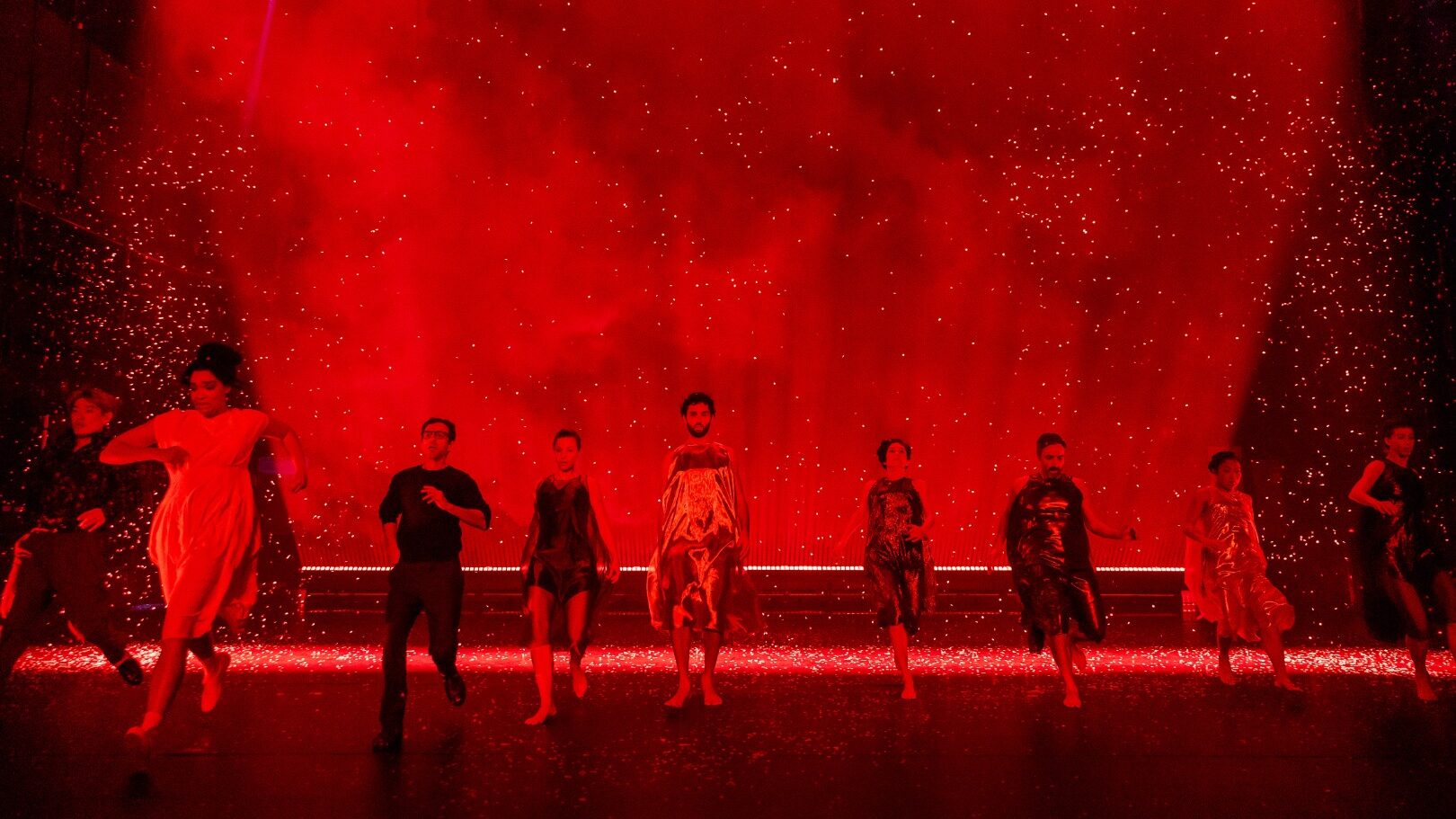
There are significant pleasures to be found here for sure. The visual production is simultaneously elegantly spare and complex, with many spectacular touches that convey the atmospheric shifts—if this is global warming, it’s certainly visually glorious. For these, credit the powerhouse design team.
I also enjoyed the dancing. Pam Tanowitz’s choreography playfully leans into traditional balletic steps while framing them with slyness and wit, notably avoiding traditional partnering. (All of The Seasons pointedly and charmingly countermands traditional gender roles.)
Of course, The Seasons is presented by Opera Philadelphia, and indeed it is—after a fashion—an opera. Corrado Rovaris and the small-but-mighty orchestra assembled here is far more attuned to Baroque stylishness than one might expect in a company largely devoted to later works.
The singing is more mixed. ARC himself certainly delivers; long-lined Baroque arias are in his musical sweet-spot, and he has several opportunities that showcase it here.
The rest of the cast—largely young singers—are promising, but not always up to the virtuoso demands of this music. I was most impressed by John Mburu in a funny turn as a doom-and-gloom weatherman. Kim’s countertenor is interestingly heard in ensembles with Costanzo, but he does not have the latter’s dulcet tone. Whitney Morrison’s soprano and stage presence are formidable, but in some of the most ornate music in the show, she needed more technical finish.
More problematic for me is the larger question of the piece itself. The socially progressive agenda about climate change too often is subsumed by the Poet-Painter story, which can seem twee and self-centered. Ruhl’s work, frankly, is particularly disappointing, wry but scattershot and lacking in depth. The resources here are awesome, but all of them come with a discomfiting undertone of privilege. A couple of jokes about trust funds and inherited Manhattan brownstones feel ironic in a way that likely wasn’t intended.
There’s no doubt that Costanzo has been brilliantly successful in presenting his singular, glamorous vision to Philadelphia, and he’s been welcomed with open arms—so far. The question that remains is, can he make the same magic happen with more traditional works?
For the answer, we’ll need to wait for future seasons.
Photos by Nile Scott Studio.
Categories: Criticism, Music, PARTERRE BOX


 reclining standards