Two different yet similar stories have dominated classical music news in the last few weeks. Boston Symphony leadership announced they would not renew Andris Nelsons’ contract as Music Director. Reasons for this remain sufficiently opaque to invite speculation (“not aligned on future vision” is a key phrase in the announcement), but Nelsons’ frequent appearances outside of Boston are almost certainly part of it. “Overstretched” and “overtired,” wrote David Allen in the New York Times.
Surely, I wasn’t the only Philadelphian who thought about Yannick Nézet-Seguin, who at the same time was moving between here and New York—his two main jobs (but not the only ones). Specifically, YNS’s calendar looked like this:
- March 6, 7, and 8: Mahler Symphony No. 2 with the Philadelphia Orchestra (where he is Music and Artistic Director)
- March 9: Tristan und Isolde production premiere at the Metropolitan Opera (where he is Music Director)
- March 10, another performance of his Mahler 2nd, this time at Carnegie Hall.
(I can almost promise you that on the seventh day he was not resting.)
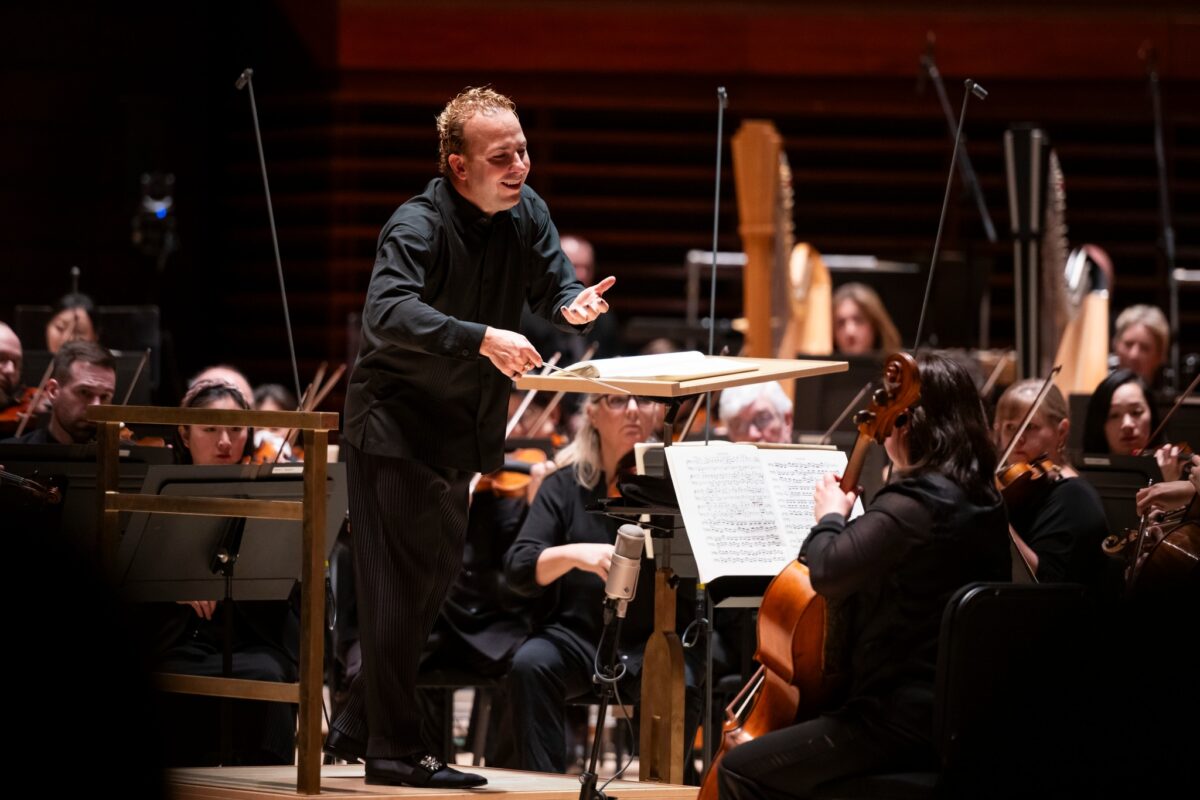
If this sounds like a cautionary tale for YNS, it’s not—at least not now. Rather the opposite: I’m here primarily to report on his Mahler performance, which I would account as one of the great triumphs of his career.
This isn’t the first time YNS has conducted Mahler No. 2 with the Philadelphians, nor the first time I’ve heard him do it. (It’s my favorite symphony by some margin, and one I attend every time I can manage it). He did it in October 2014, and I heard two performances. They were certainly very fine, but for me ultimately not memorable.
A decade-plus later he has significantly rethought the work in every way. It was clear from the gyrating strings in the opening, which throbbed with an electric sense of urgency. There was a notable variety of tempos here, at more extremes than he had found previously. The initial theme, with its throbbing, almost disconcerting sense of movement (lots of quick sawing in the strings) was often breathtakingly fast… but the introduction of the secondary theme, with its more stable legato, was notably slow and gentle. Throughout, the first movement seemed marked by the interplay between these two moods, which for me brought an almost narrative sense of a world poised between tradition and chaotic uncertainty.
That divided world is certainly my sense of the second movement, with its Ländler melody that begins as a reassuringly pretty dance (surely a nod to Haydn and Mozart symphonies), but in repeats gradually fades away, even disintegrates. It was gorgeously played here, and YNS brought a particularly graceful shape to it, but my own preference is for both a slower tempo and longer rests within some key phrases.
I found everyone back in dazzling form for the Klezmer-inflected third movement, which is precisely the kind of energetic, almost disorganized musical world that Yannick often seems to thrive in.
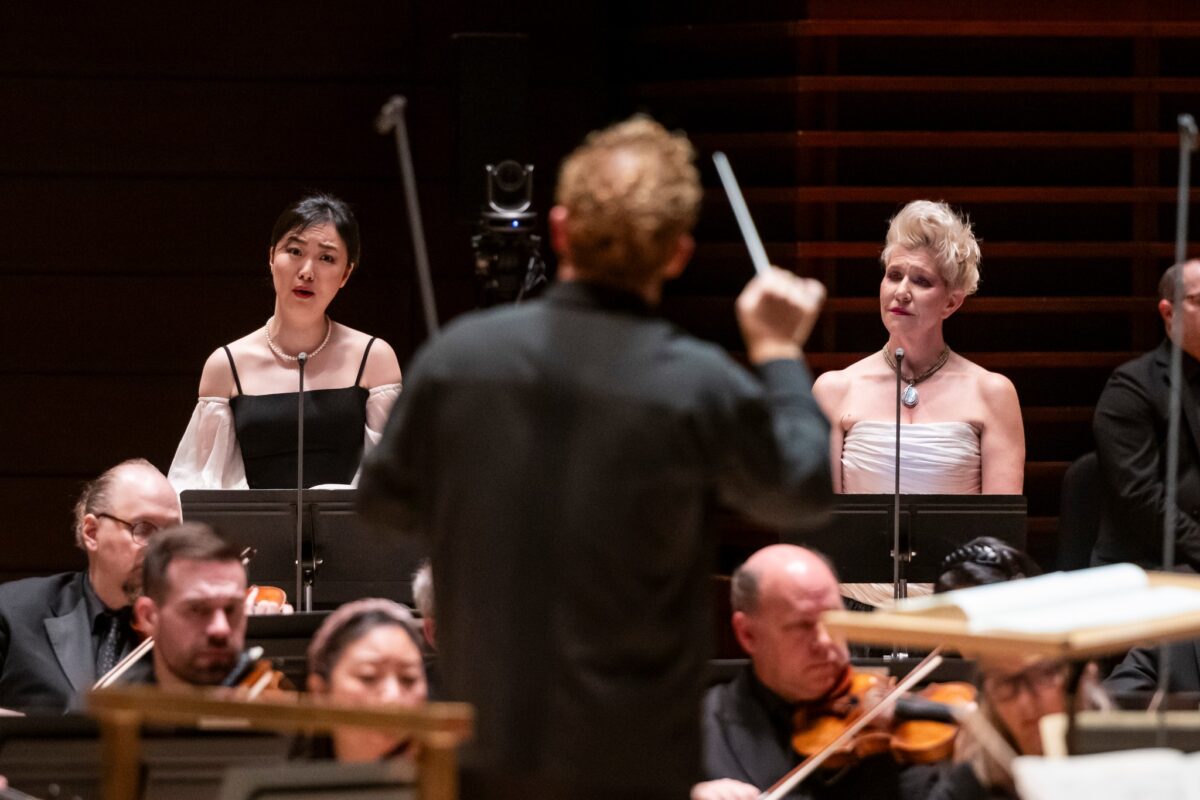
That is, of course, light years away from the final two movements, which take up most of Symphony No. 2, and which are among the most profound in any music I know. Joyce DiDonato took the alto part, and the hushed poetry and sense of suspended time that she brought to “Urlicht” was unforgettable. (Here and elsewhere, the audience was as close to silent as any I’ve experienced—a testament to the general mood.) Joined later by the Philadelphia Symphonic Choir (superb—bravo to director Joe Miller!), and soprano Ying Fang (absolutely lovely, if not quite soft enough on her key high notes in the “Aufersteh’n, ja, aufersteh’n” phrase), the work finished with an overwhelming sense of scope.
After the final crescendo… pandemonium from the audience.
Am I fan-boying out here? Maybe, but I think it’s more than that. Yannick has a devoted following, but there are certainly nay-sayers, and among the central criticisms are two: that he spreads himself too thin, and that he lacks gravitas.
I’d say this week in March effectively thwarted both complaints. I don’t know how he does it, but YNS clearly is more than meeting his charges at the Met and the Philadelphia Orchestra. This is music-making at the highest level, and the Philadelphia Orchestra sounds as good as I’ve heard them in 35 years of attending their concerts.
As for gravitas, I have never heard a Mahler 2nd that felt more profound than here. (I haven’t heard the Met Tristan yet, but I did attend both concert performances last year in Philly and thought he was in the major leagues as a Wagner conductor.)
It speaks to YNS’s seriousness that he is increasingly making Mahler a central focus. Following this Mahler 2nd, next season with the Philadelphia Orchestra, he will lead Symphonies 1, 3, 5 and 7 – and in New York, during next year he will conduct all of them with orchestra including (in addition to Philadelphia), The Metropolitan Opera Orchestra, and the Vienna Philharmonic. Personally, I cannot wait.
Categories: Criticism, Music, Philadelphia


 reclining standards