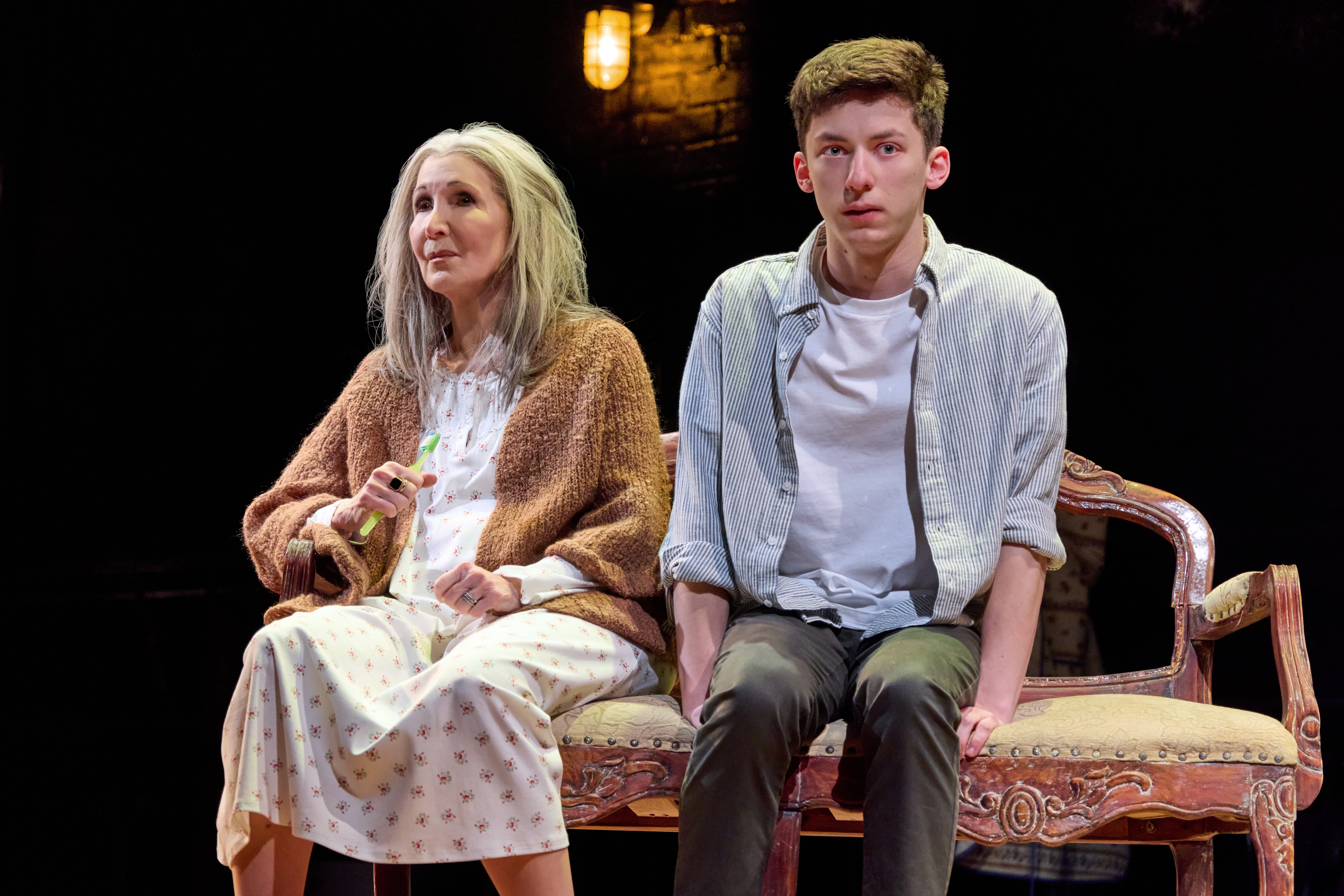
Joshua Harmon excels at complicated familial narratives. He’s done it pitched to high comedy (the perennially popular Bad Jews) and on a grand scale (Prayer for the French Republic, seen on Broadway last year) – but perhaps never better than in We Had a World, currently having its world premiere at City Center Stage II, in a Manhattan Theatre Club production.
Perhaps the secret to his success lies in the family story he’s telling. In this case, it’s his own.
That might sound like navel gazing, and it almost literally is: the play begins with Harmon’s ringer, played by Andrew Barth Feldman, sitting in his underwear, parsing a phone call from his grandmother Renee (Joanna Gleason). Ninety-four and dying of pancreatic cancer, she implores her grandson to write a play about the fraught relationship between his mother, Ellen (Jeanine Serralles) and her unseen, estranged sister Susan. “Make it as bitter and vitriolic as possible,” she recommends.
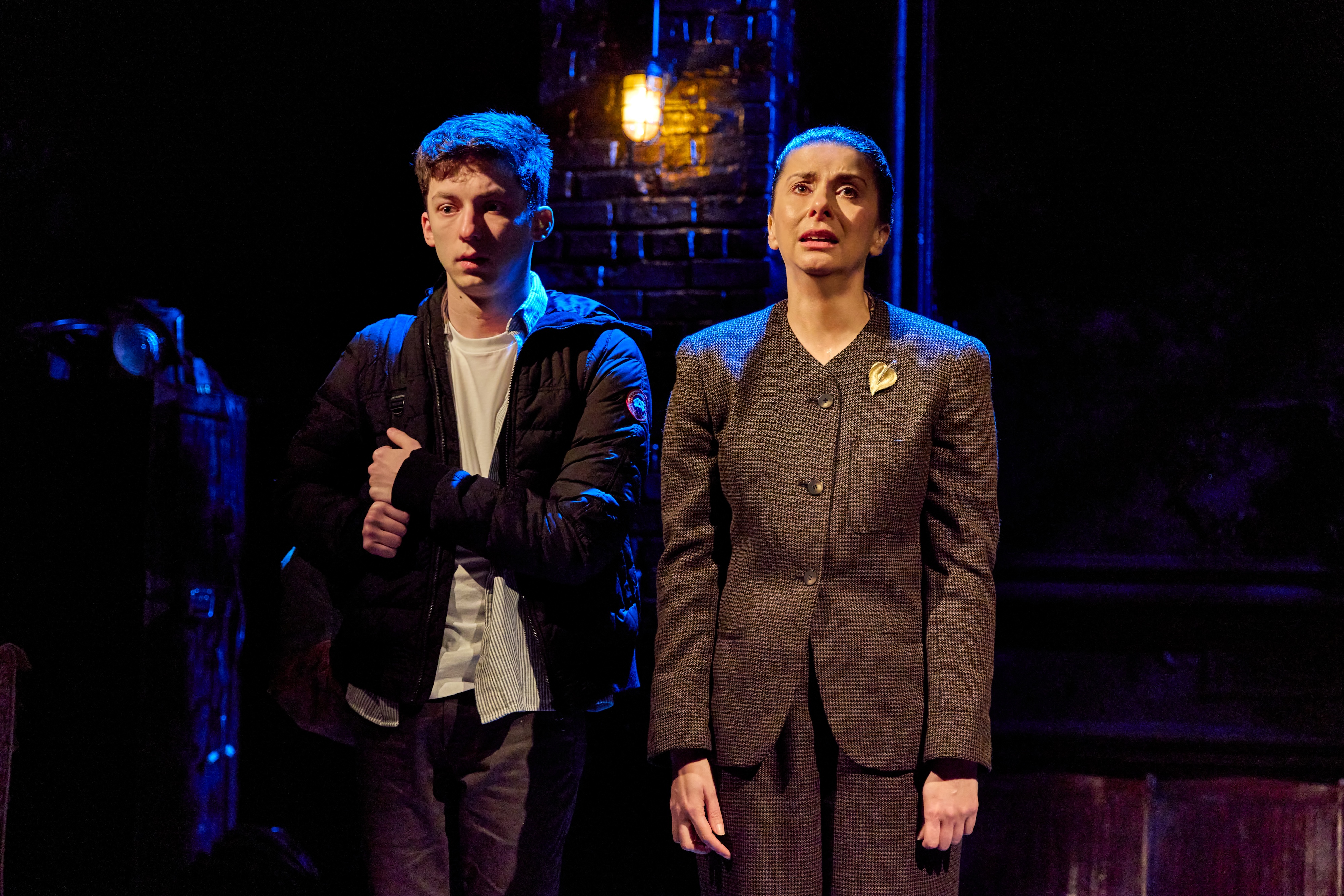
Yet We Had a World succeeds because Harmon rejects that advice – he tempers his portrait of the complicated women who raised him with empathy and grace. Emerging over 100 intermission-less minutes, the audience comes to understand the deep bond Josh and Renee share, built around their mutual love of theater, arthouse films, and all the beauty the world has to offer. We also comprehend how Renee’s chronic alcoholism darkens her relationship with her daughter, who worries about its influence on her child.
Harmon doesn’t lean into stereotypes, and neither do the actors under Trip Cullman’s sensitively judged direction. Feldman occasionally gives a glimpse of the playwright as flighty neurotic, but he mostly demonstrates how he is affected as an intermediary between Renee and Ellen. Returning to the New York stage after a 13-year absence, Gleason crafts Renee as an Upper West Side Auntie Mame, complete with a deliciously appliquéd mid-Atlantic accent. Loving yet self-destructive, her Renee is a complicated, sympathetic figure, at once generous and self-centered. Serralles strongly conveys Ellen’s love for and frustration toward her mother.
The play runs slightly out of steam as it nears its conclusion – a subplot involving distress over climate change only distracts from the powerful central story – and some aspects of John Lee Beatty’s scenic design are eclipsed by the three-quarter seating configuration at the intimate City Center space. At the same time, I can hardly imagine seeing this work at a larger venue, where you might lose the sense you’re eavesdropping on someone’s ongoing trauma.
If all happy families are alike but each unhappy family is unique, how do you parse a clan that seems simultaneously devoted and miserable. We Had a World offers a moving clue.
We Had a World runs through May 11. All remaining performances are sold out, but information about cancellations can be found here.
Photo credit: Jeremy Daniel


 reclining standards